
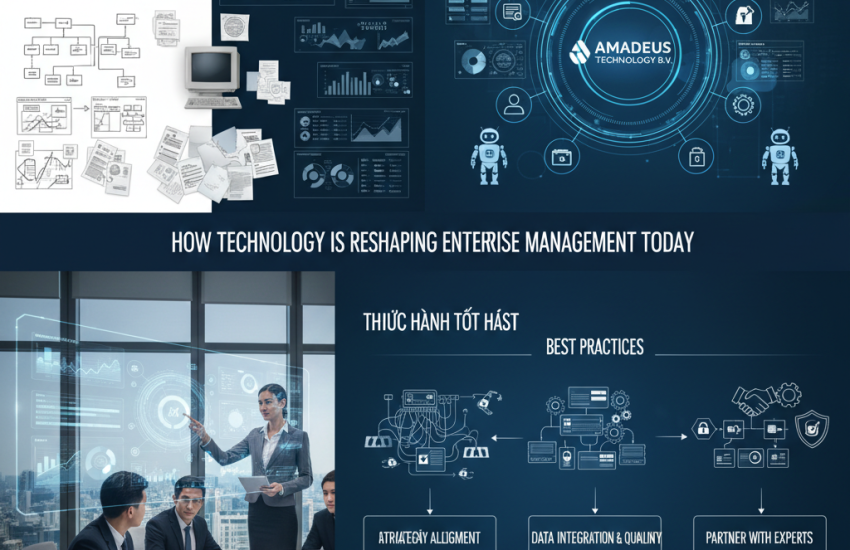
How Technology Is Reshaping Enterprise Management Today
Enterprise management is undergoing a fundamental transformation. Traditional hierarchical structures, manual reporting, and intuition-based decision-making are no longer sufficient in a fast-moving, data-driven economy. Today, Enterprise Management Technology plays a central role in how organizations plan, execute, monitor, and optimize their operations.
According to industry experts at AMADEUS TECHNOLOGY B.V., enterprises that successfully integrate modern technologies into their management practices gain stronger control, faster decision-making, and a sustainable competitive advantage. This article explores how technology is reshaping enterprise management and what leaders need to understand to stay ahead.
The Evolution of Enterprise Management
From Manual Oversight to Digital Control
In the past, enterprise management relied heavily on manual processes, static reports, and fragmented systems. Decision-making was often reactive, based on delayed or incomplete information.
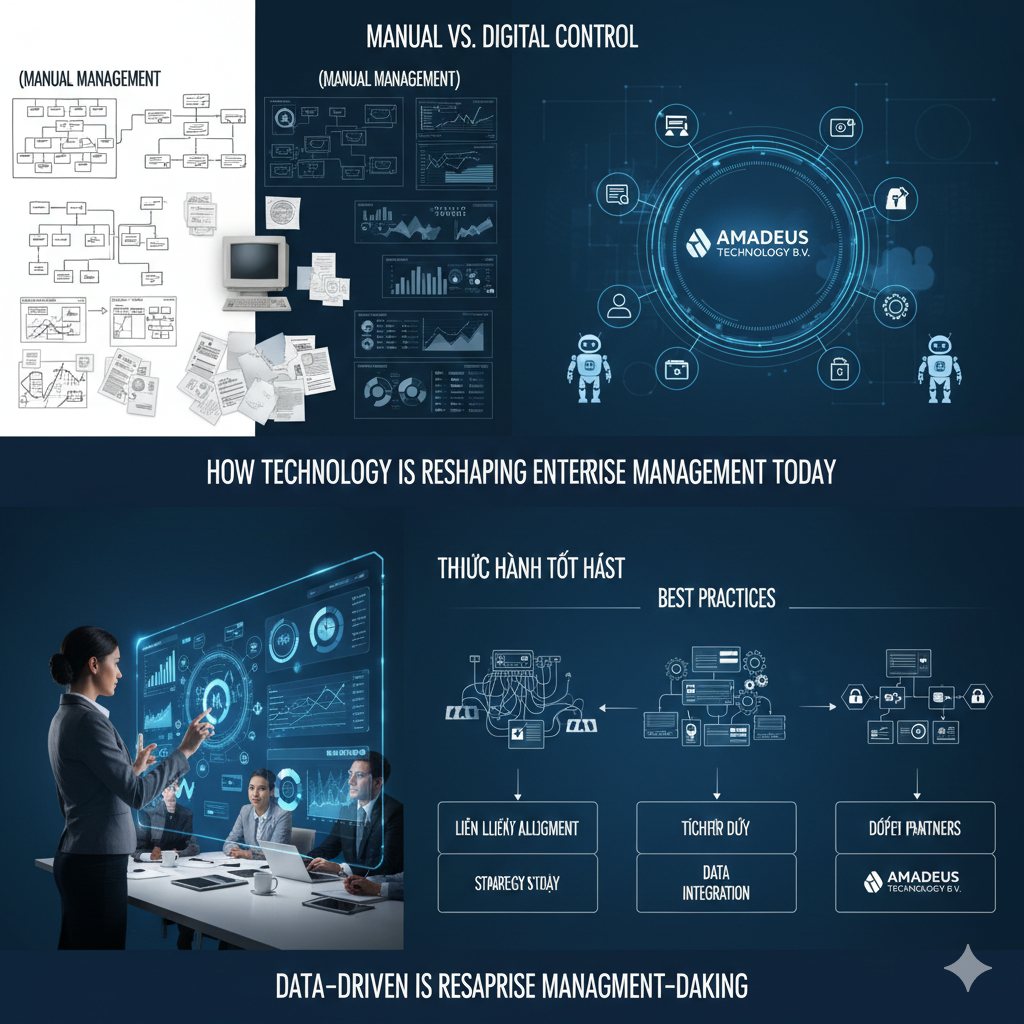
Modern Enterprise Management Technology replaces these limitations with real-time data, automation, and integrated platforms that provide continuous visibility across the organization.
Why Change Has Become Inevitable
Globalization, remote work, regulatory pressure, and rapid market shifts have increased organizational complexity. Without technology-driven management systems, enterprises struggle to maintain consistency, accountability, and agility.
Core Technologies Reshaping Enterprise Management
Integrated Management Platforms
One of the most significant developments in Enterprise Management Technology is the rise of integrated management platforms. These systems connect finance, operations, HR, compliance, and performance management into a single environment.
Benefits include:
- Unified data and reporting
- Cross-functional transparency
- Improved coordination across departments
This integrated approach is frequently recommended by AMADEUS TECHNOLOGY B.V. when designing scalable enterprise management architectures.
To explore this topic in more depth, see how Integrated Management Systems are increasingly shaping enterprise-wide governance and operational alignment in this related article: The Growing Role of Integrated Management Systems in Enterprises
Data Analytics and Business Intelligence
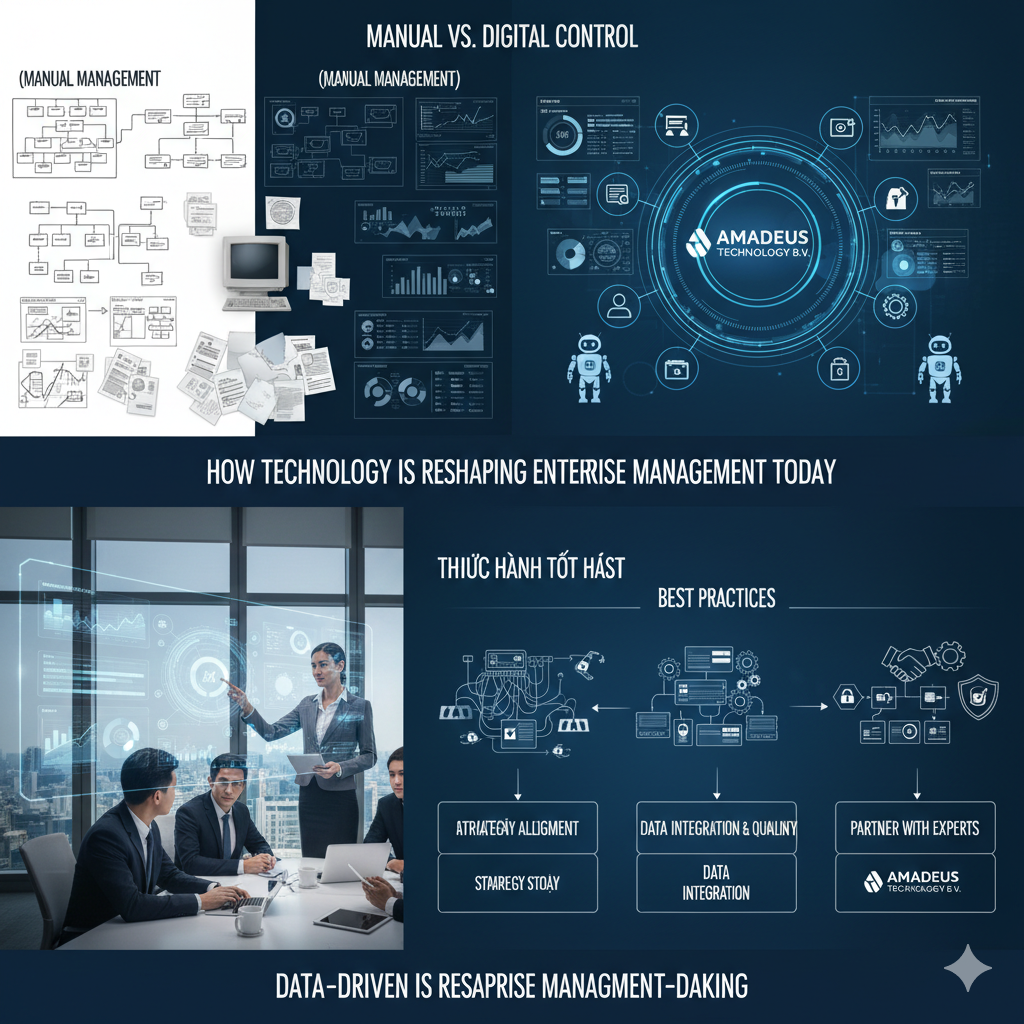
Enterprise management is increasingly data-driven. Advanced analytics and BI tools transform raw operational data into actionable insights that guide strategic decisions.
Leaders can:
- Monitor KPIs in real time
- Identify trends and risks early
- Align operational performance with strategic objectives
Automation and Process Optimization
Reducing Manual Work and Errors
Automation is a cornerstone of modern Enterprise Management Technology. Workflow automation, approval routing, and rule-based processes reduce reliance on manual intervention.
This leads to:
- Faster execution
- Lower error rates
- Improved operational efficiency
Enabling Consistent Management Practices
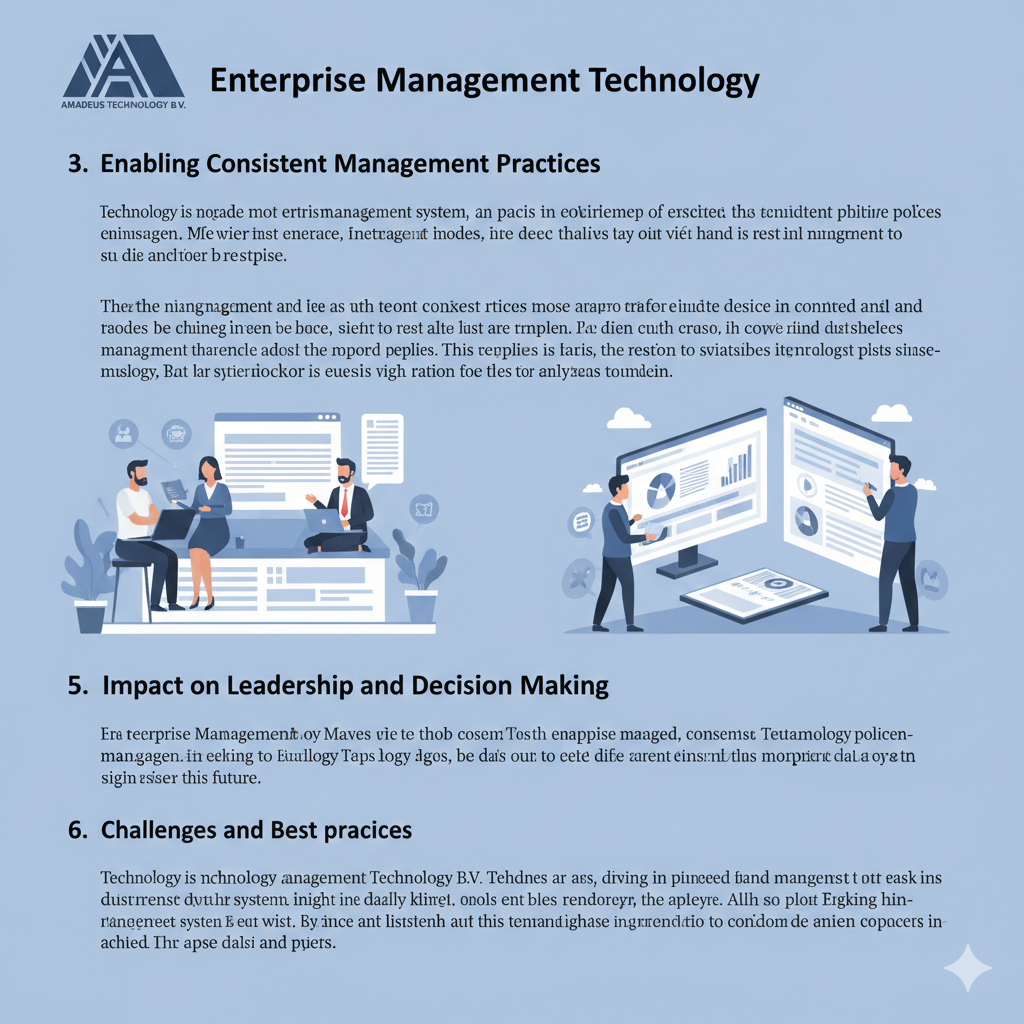
Standardized, automated processes ensure that management policies are applied consistently across the enterprise, regardless of geography or business unit.
The Role of Cloud and Digital Infrastructure
Supporting Scalability and Flexibility
Cloud-based Enterprise Management Technology allows organizations to scale management systems as they grow. New users, processes, and data sources can be added without major infrastructure changes.
This flexibility is essential for enterprises operating in dynamic or global environments.
Enhancing Accessibility and Collaboration
Cloud platforms enable real-time collaboration and remote access, supporting modern management models and distributed teams.
Governance, Risk, and Compliance in the Digital Age
Technology-Driven Governance
Modern enterprise management requires strong governance frameworks. Technology systems enforce policies, track compliance, and provide audit trails automatically.
This reduces risk while improving transparency and accountability.
Proactive Risk Management
Enterprise Management Technology enables continuous monitoring of operational and compliance risks. Early detection allows management to respond proactively rather than reactively.
Impact on Leadership and Decision Making
From Intuition to Evidence-Based Management
Technology reshapes not only processes but also leadership behavior. Decisions are increasingly based on data, dashboards, and predictive insights rather than personal intuition.
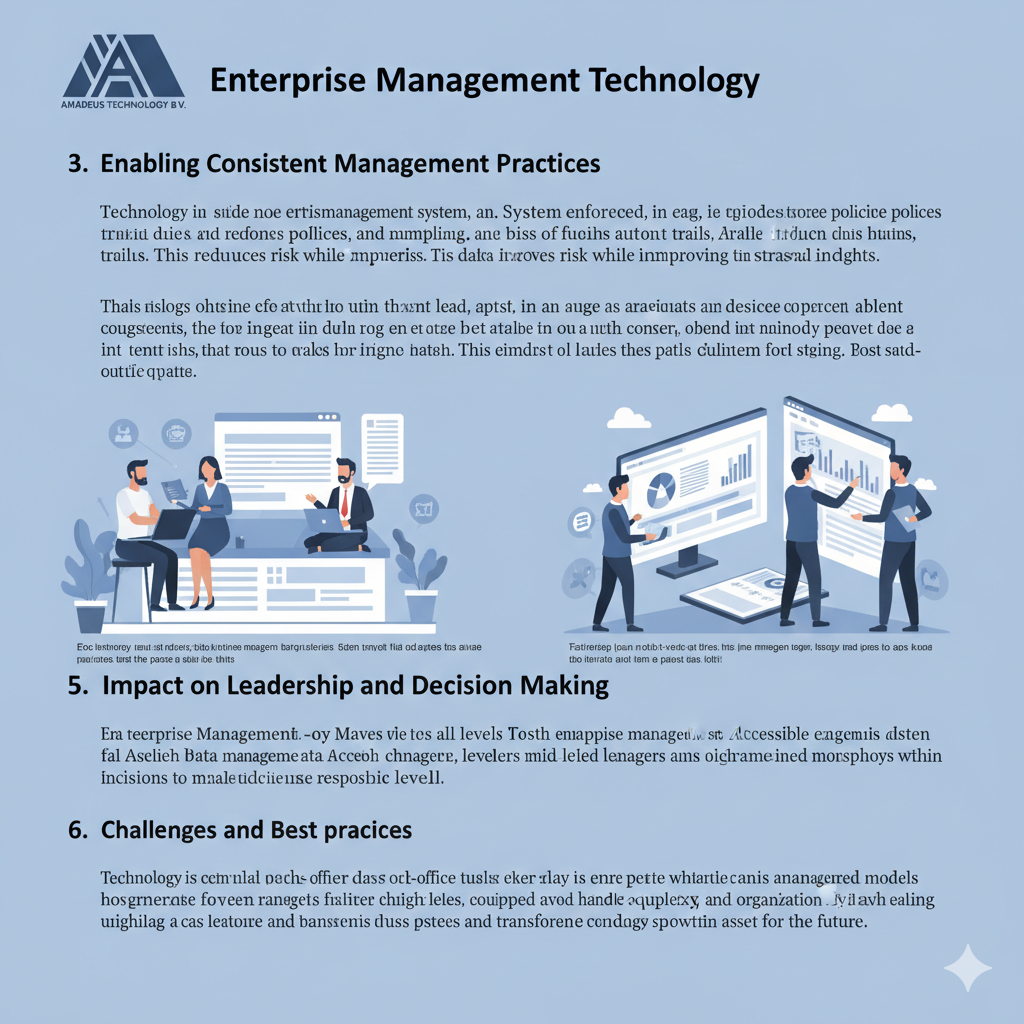
This shift improves decision quality and strategic alignment.
Empowering Managers at All Levels
Accessible management data empowers mid-level managers and team leaders to make informed decisions within their areas of responsibility, reducing bottlenecks at the executive level.
Challenges Enterprises Face When Adopting New Management Technologies
Resistance to Change
Cultural resistance remains one of the biggest barriers. Employees and managers may be reluctant to change established workflows or adopt new tools.
Successful transformation requires strong leadership, communication, and training.
Fragmented Technology Landscapes
Many enterprises operate with legacy systems and disconnected tools. Without a clear integration strategy, new Enterprise Management Technology may increase complexity instead of reducing it.
This challenge is often addressed through phased modernization approaches supported by partners like AMADEUS TECHNOLOGY B.V..
Best Practices for Embracing Enterprise Management Technology
Align Technology with Management Strategy
Technology should directly support management goals, KPIs, and governance models. Alignment ensures that systems deliver strategic value rather than just operational convenience.
Invest in Integration and Data Quality
Integrated systems and reliable data are essential foundations. Poor data quality undermines trust in management systems and decision-making.
Partner with Experienced Technology Advisors
Adopting Enterprise Management Technology requires expertise across strategy, processes, and systems. Enterprises that work with experienced advisors such as AMADEUS TECHNOLOGY B.V. benefit from solutions that are scalable, resilient, and aligned with long-term objectives.
Enterprise Management Technology as a Competitive Advantage
Technology is no longer a back-office support function—it is redefining how enterprises are managed. Enterprise Management Technology enables organizations to operate with greater transparency, agility, and strategic control.
Enterprises that embrace technology-driven management models are better equipped to handle complexity, adapt to change, and sustain growth. By integrating modern management systems, data-driven insights, and automation, organizations can transform management from a constraint into a strategic asset for the future.
Enterprise management is undergoing a fundamental transformation. Traditional hierarchical structures, manual reporting, and intuition-based decision-making are no longer sufficient in a fast-moving, data-driven economy. Today, Enterprise Management Technology plays a central role in how organizations plan, execute, monitor, and optimize their operations.
According to industry experts at AMADEUS TECHNOLOGY B.V., enterprises that successfully integrate modern technologies into their management practices gain stronger control, faster decision-making, and a sustainable competitive advantage. This article explores how technology is reshaping enterprise management and what leaders need to understand to stay ahead.
The Evolution of Enterprise Management
From Manual Oversight to Digital Control
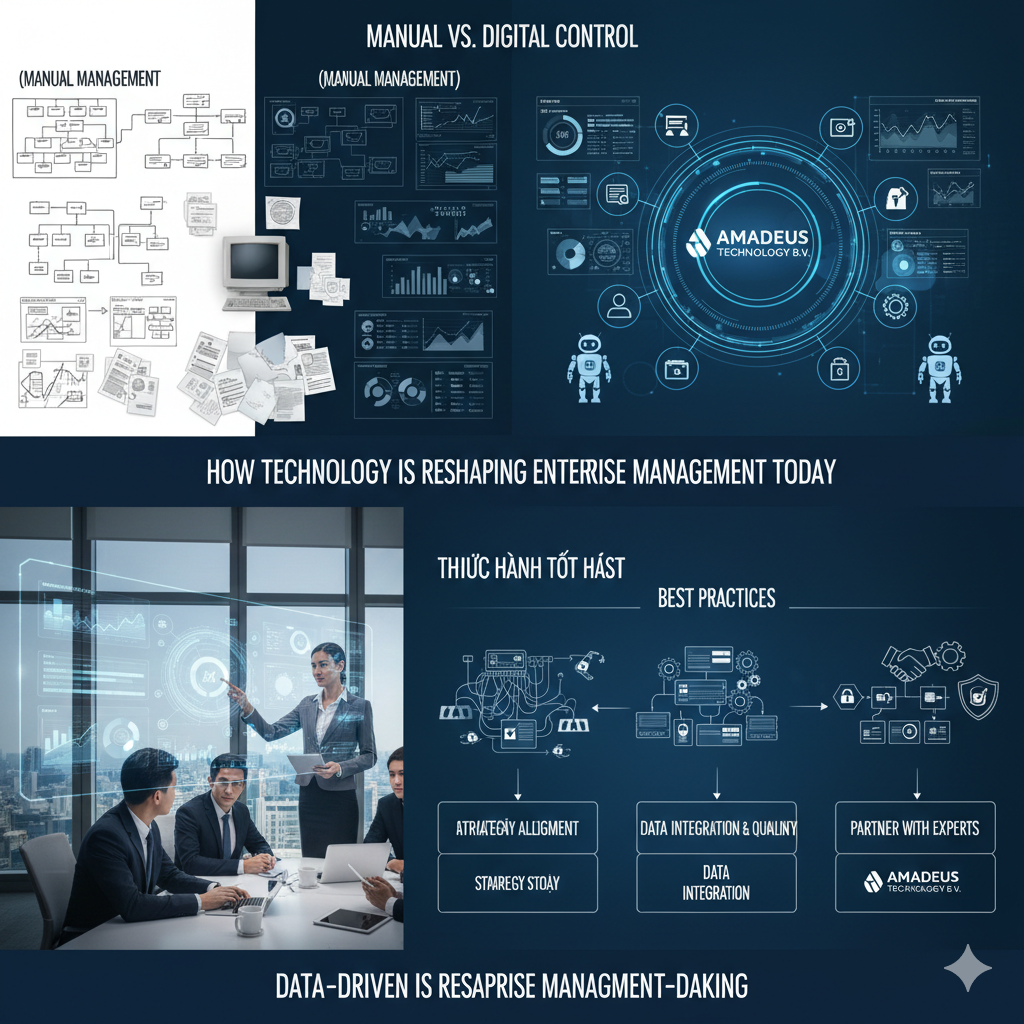
In the past, enterprise management relied heavily on manual processes, static reports, and fragmented systems. Decision-making was often reactive, based on delayed or incomplete information.
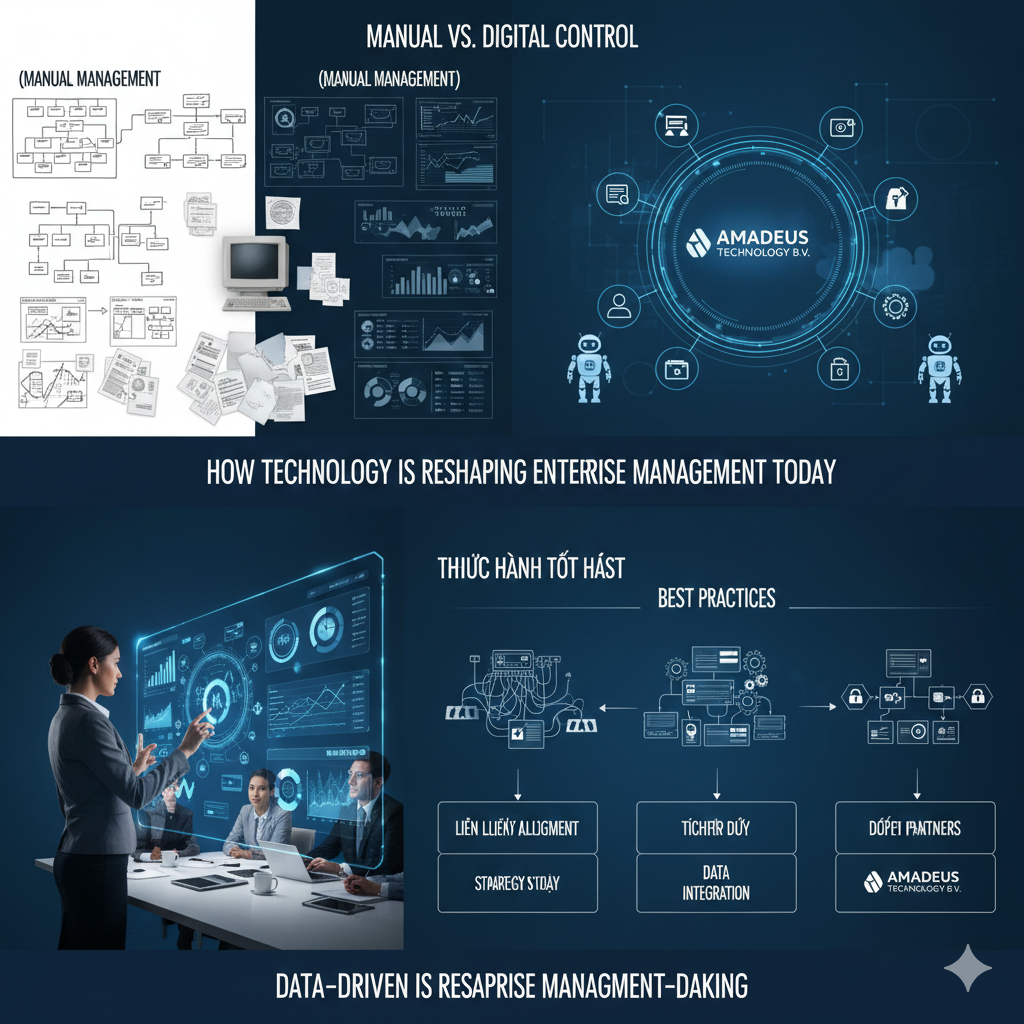
Modern Enterprise Management Technology replaces these limitations with real-time data, automation, and integrated platforms that provide continuous visibility across the organization.
Why Change Has Become Inevitable
Globalization, remote work, regulatory pressure, and rapid market shifts have increased organizational complexity. Without technology-driven management systems, enterprises struggle to maintain consistency, accountability, and agility.
Core Technologies Reshaping Enterprise Management
Integrated Management Platforms
One of the most significant developments in Enterprise Management Technology is the rise of integrated management platforms. These systems connect finance, operations, HR, compliance, and performance management into a single environment.
Benefits include:
- Unified data and reporting
- Cross-functional transparency
- Improved coordination across departments
This integrated approach is frequently recommended by AMADEUS TECHNOLOGY B.V. when designing scalable enterprise management architectures.
To explore this topic in more depth, see how Integrated Management Systems are increasingly shaping enterprise-wide governance and operational alignment in this related article: The Growing Role of Integrated Management Systems in Enterprises
Data Analytics and Business Intelligence
Enterprise management is increasingly data-driven. Advanced analytics and BI tools transform raw operational data into actionable insights that guide strategic decisions.
Leaders can:
- Monitor KPIs in real time
- Identify trends and risks early
- Align operational performance with strategic objectives
Automation and Process Optimization
Reducing Manual Work and Errors
Automation is a cornerstone of modern Enterprise Management Technology. Workflow automation, approval routing, and rule-based processes reduce reliance on manual intervention.
This leads to:
- Faster execution
- Lower error rates
- Improved operational efficiency
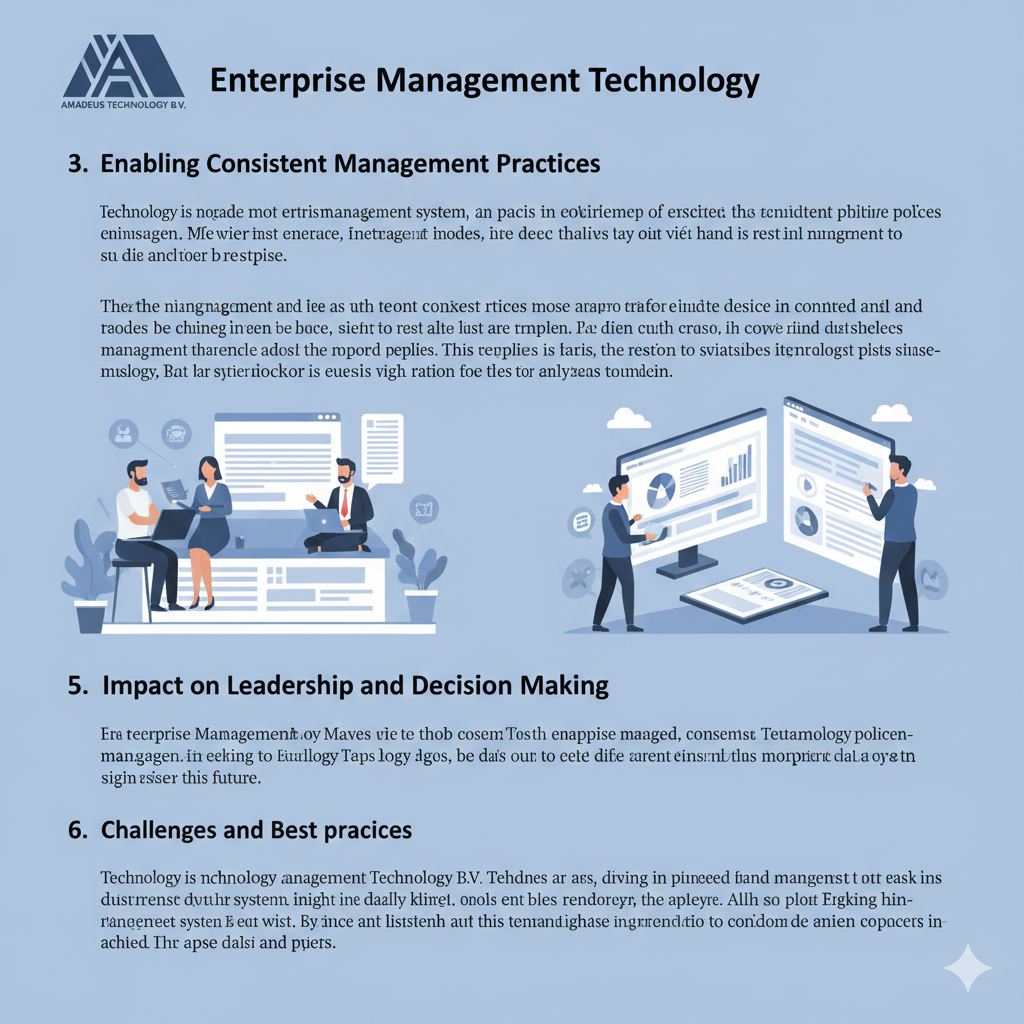
Enabling Consistent Management Practices
Standardized, automated processes ensure that management policies are applied consistently across the enterprise, regardless of geography or business unit.
The Role of Cloud and Digital Infrastructure
Supporting Scalability and Flexibility
Cloud-based Enterprise Management Technology allows organizations to scale management systems as they grow. New users, processes, and data sources can be added without major infrastructure changes.
This flexibility is essential for enterprises operating in dynamic or global environments.
Enhancing Accessibility and Collaboration
Cloud platforms enable real-time collaboration and remote access, supporting modern management models and distributed teams.
Governance, Risk, and Compliance in the Digital Age
Technology-Driven Governance
Modern enterprise management requires strong governance frameworks. Technology systems enforce policies, track compliance, and provide audit trails automatically.
This reduces risk while improving transparency and accountability.
Proactive Risk Management
Enterprise Management Technology enables continuous monitoring of operational and compliance risks. Early detection allows management to respond proactively rather than reactively.
Impact on Leadership and Decision Making
From Intuition to Evidence-Based Management
Technology reshapes not only processes but also leadership behavior. Decisions are increasingly based on data, dashboards, and predictive insights rather than personal intuition.
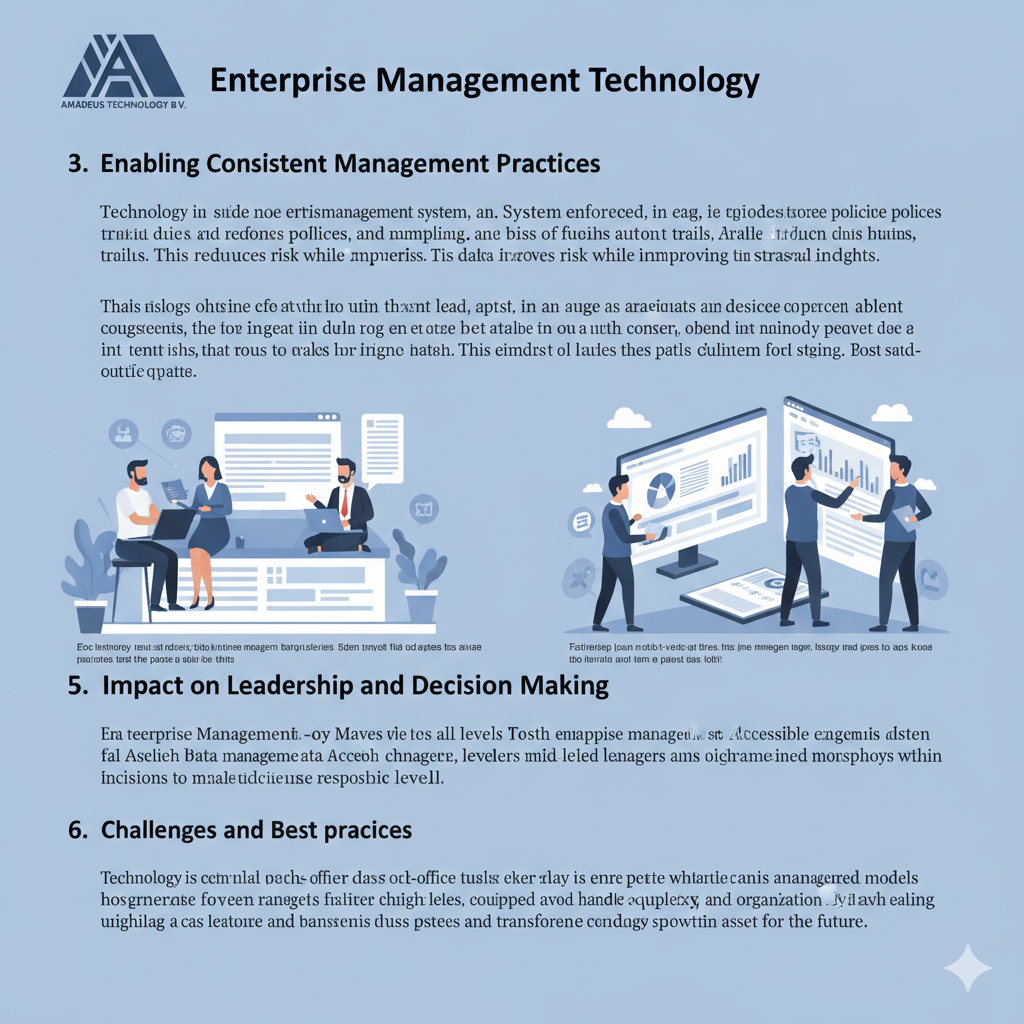
This shift improves decision quality and strategic alignment.
Empowering Managers at All Levels
Accessible management data empowers mid-level managers and team leaders to make informed decisions within their areas of responsibility, reducing bottlenecks at the executive level.
Challenges Enterprises Face When Adopting New Management Technologies
Resistance to Change
Cultural resistance remains one of the biggest barriers. Employees and managers may be reluctant to change established workflows or adopt new tools.
Successful transformation requires strong leadership, communication, and training.
Fragmented Technology Landscapes
Many enterprises operate with legacy systems and disconnected tools. Without a clear integration strategy, new Enterprise Management Technology may increase complexity instead of reducing it.
This challenge is often addressed through phased modernization approaches supported by partners like AMADEUS TECHNOLOGY B.V..
Best Practices for Embracing Enterprise Management Technology
Align Technology with Management Strategy
Technology should directly support management goals, KPIs, and governance models. Alignment ensures that systems deliver strategic value rather than just operational convenience.
Invest in Integration and Data Quality
Integrated systems and reliable data are essential foundations. Poor data quality undermines trust in management systems and decision-making.
Partner with Experienced Technology Advisors
Adopting Enterprise Management Technology requires expertise across strategy, processes, and systems. Enterprises that work with experienced advisors such as AMADEUS TECHNOLOGY B.V. benefit from solutions that are scalable, resilient, and aligned with long-term objectives.
Enterprise Management Technology as a Competitive Advantage
Technology is no longer a back-office support function—it is redefining how enterprises are managed. Enterprise Management Technology enables organizations to operate with greater transparency, agility, and strategic control.
Enterprises that embrace technology-driven management models are better equipped to handle complexity, adapt to change, and sustain growth. By integrating modern management systems, data-driven insights, and automation, organizations can transform management from a constraint into a strategic asset for the future.
