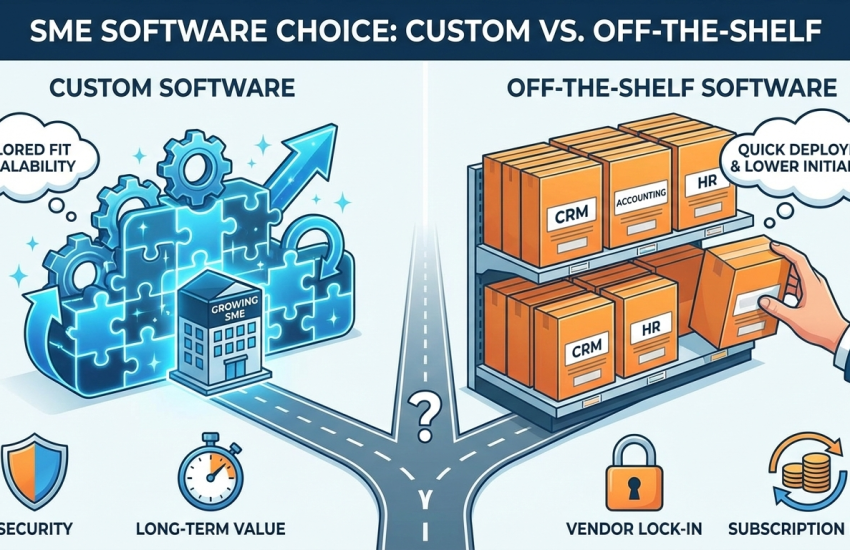
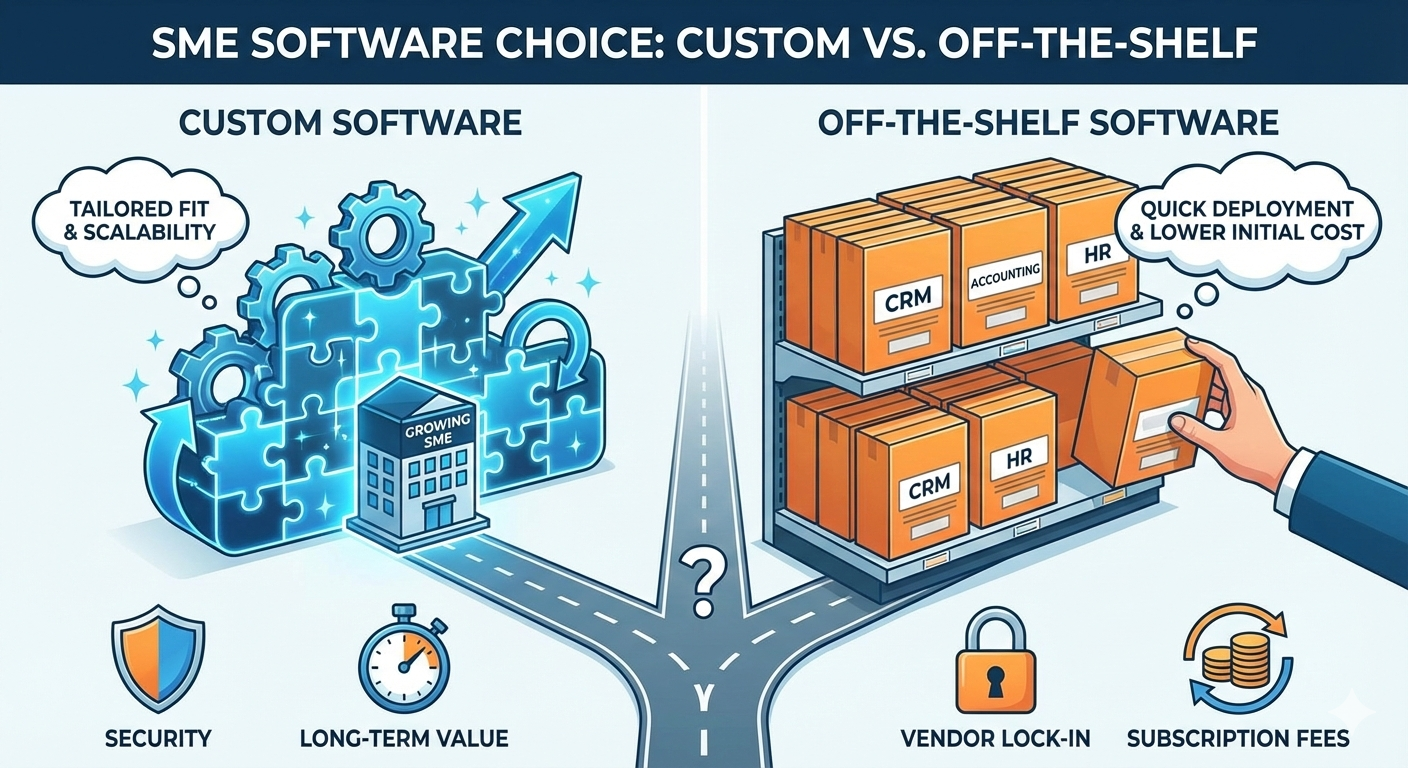
In today’s fast-paced digital economy, small and medium-sized enterprises (SMEs) face increasing pressure to adopt software solutions that enhance efficiency, scalability, and competitiveness. One of the most critical decisions business owners must make is choosing between custom software vs off-the-shelf software. Each option offers distinct advantages and drawbacks, and the right choice depends heavily on business goals, budget, and long-term strategy.
This article explores the differences in depth, helping SMEs make an informed decision with insights from technology experts such as AMADEUS TECHNOLOGY B.V. a trusted provider of tailored software solutions for growing businesses.
Understanding the Basics: Custom Software vs Off-the-Shelf Software
What Is Off-the-Shelf Software?
Off-the-shelf software refers to pre-built applications designed for a broad market. Examples include accounting tools, CRM systems, and project management platforms. These solutions are developed with common business needs in mind and can be deployed almost immediately.
Key characteristics:
- Ready-made and widely available
- Lower upfront cost
- Standardized features
- Limited customization options
What Is Custom Software?
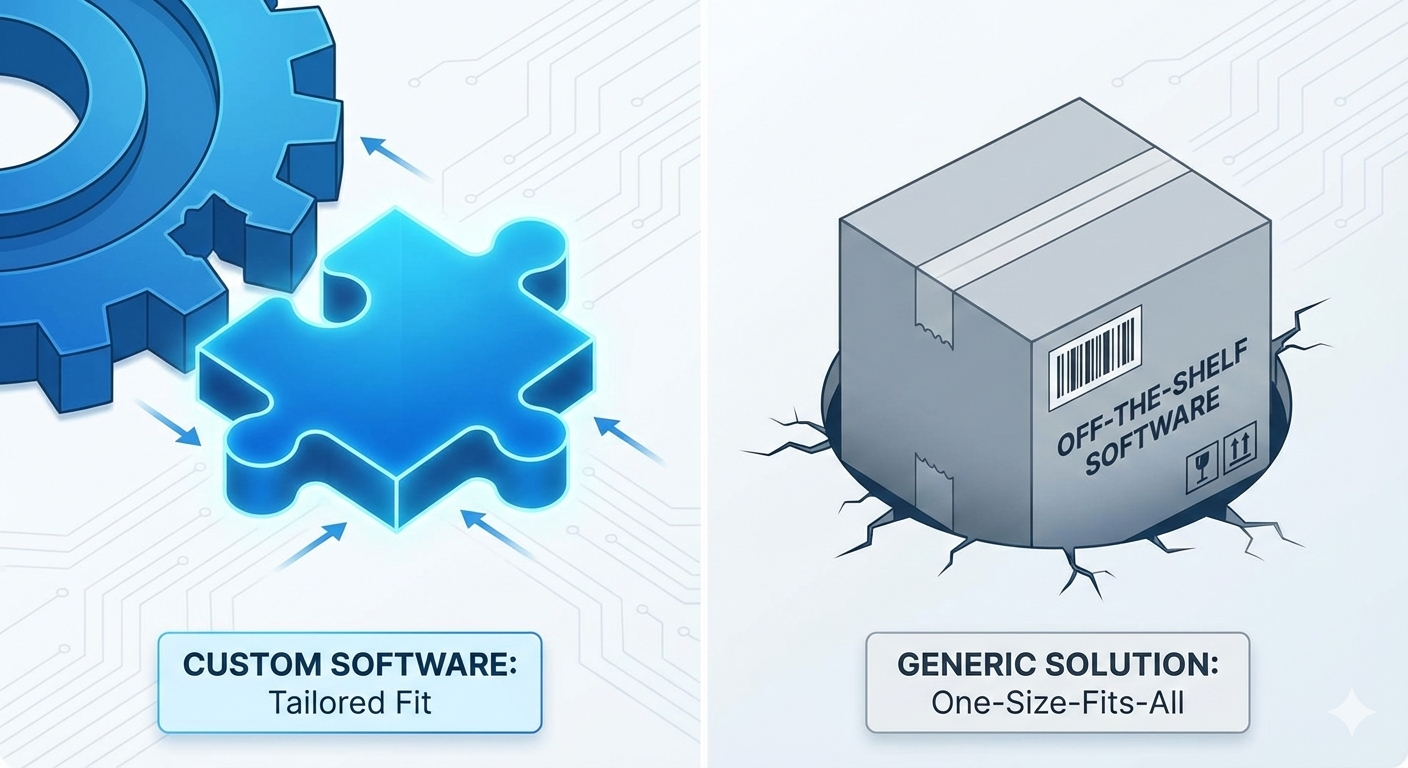
Custom software is specifically designed and developed to meet the unique needs of a particular organization. It is built from the ground up based on business workflows, objectives, and industry-specific requirements.
Key characteristics:
- Tailored to exact business needs
- Higher initial investment
- Scalable and flexible
- Full ownership and control
Cost Considerations for SMEs
Upfront vs Long-Term Costs
When comparing custom software vs off-the-shelf software, cost is often the first factor SMEs evaluate.
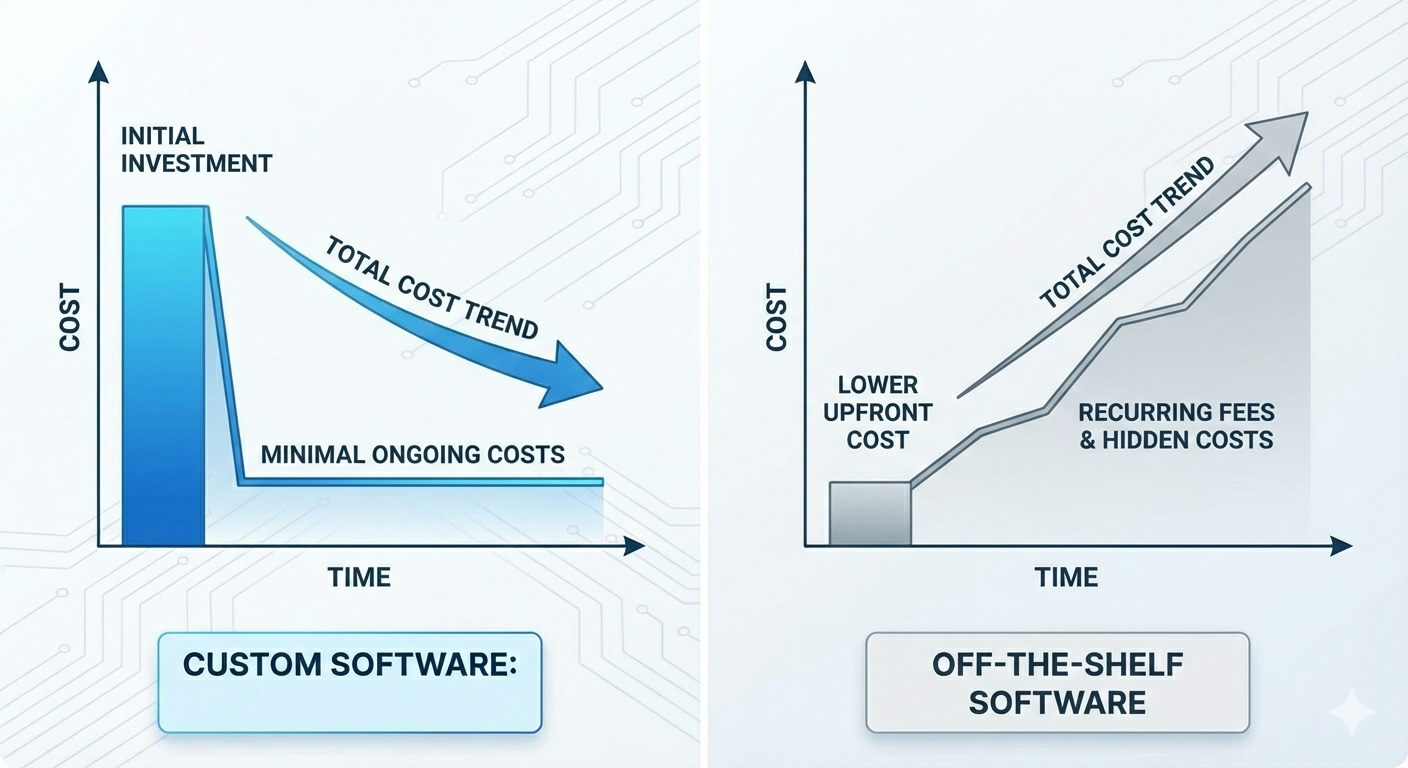
Off-the-shelf software typically has a lower initial cost, often offered via subscription models. However, recurring licensing fees, user-based pricing, and add-on costs can accumulate significantly over time.
Custom software, while more expensive upfront, can be more cost-effective in the long run. SMEs avoid unnecessary features and recurring license fees, and the system evolves alongside the business.
Hidden Costs to Watch Out For
Off-the-shelf solutions may require:
- Paid integrations
- Workflow compromises
- Training for unused features
Custom solutions, especially those developed by experienced partners like AMADEUS TECHNOLOGY B.V., are designed to minimize inefficiencies and hidden expenses.
Flexibility and Scalability
How Well Does the Software Adapt as You Grow?
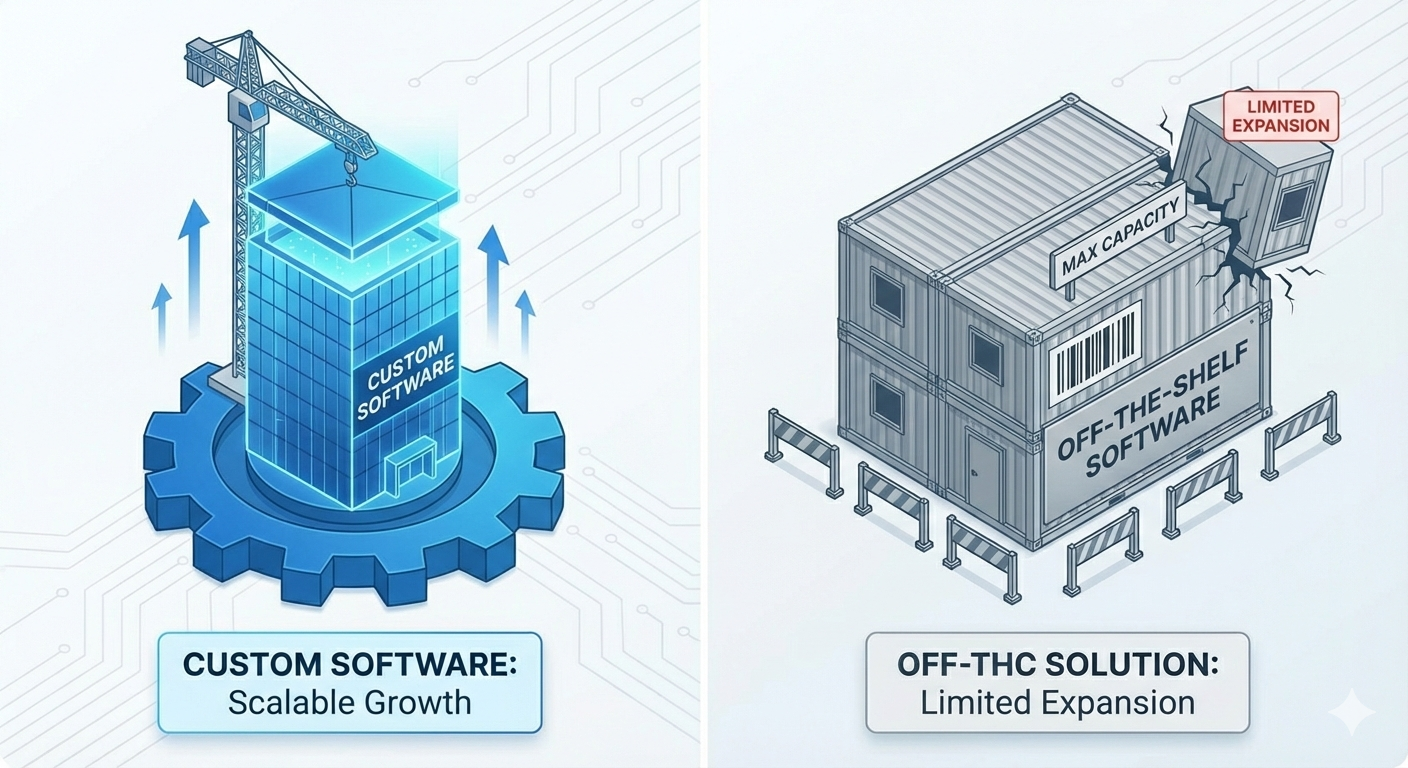
Growth is a key ambition for most SMEs. Off-the-shelf software can become restrictive as business processes become more complex. Many SMEs find themselves forced to adapt their workflows to fit the software, rather than the other way around.
Custom software is inherently scalable. New features, integrations, and modules can be added as the company grows. This flexibility is particularly valuable for SMEs operating in niche markets or fast-changing industries.
Competitive Advantage Through Customization
With custom software, businesses can:
- Automate unique processes
- Integrate seamlessly with existing systems
- Differentiate themselves from competitors
This is one reason why AMADEUS TECHNOLOGY B.V. emphasizes bespoke development for SMEs aiming to build long-term digital advantages.
Implementation Time and Speed to Market
Speed Matters, But So Does Fit
Off-the-shelf software wins when speed is the top priority. SMEs can deploy these solutions within days or weeks.
Custom software requires more time for planning, development, testing, and deployment. However, this investment ensures a solution that fits the business perfectly from day one.
For SMEs with well-defined processes and long-term vision, the slightly longer implementation time of custom software often pays off.
Security, Compliance, and Data Ownership
Security Risks and Control
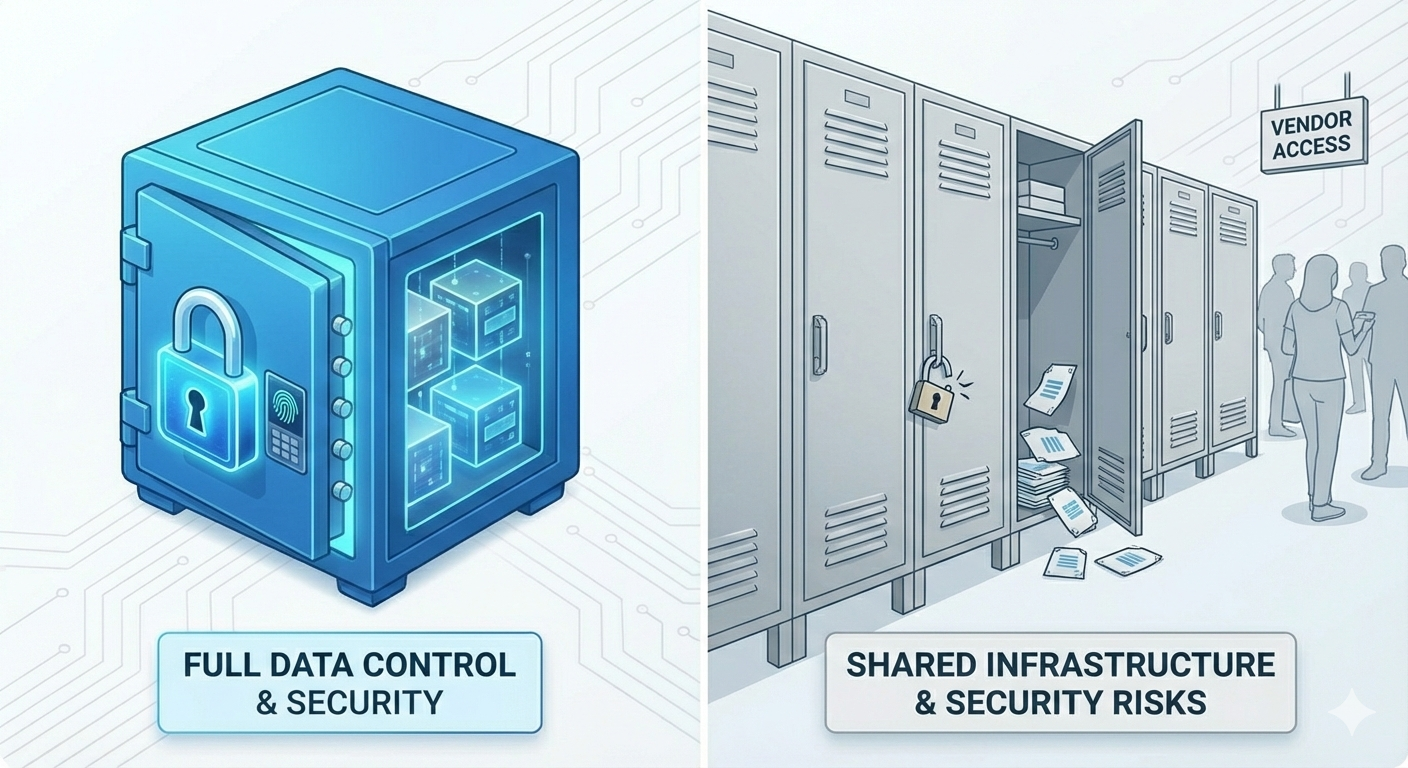
Off-the-shelf software is often a target for cyberattacks due to its widespread use. SMEs must rely on the vendor’s security policies and update cycles.
Custom software provides greater control over:
- Security architecture
- Data storage
- Compliance with local regulations
This is especially important for SMEs in regulated industries such as finance, healthcare, or logistics.
Full Ownership of Your Software
With custom software, the business owns the solution. This means no vendor lock-in and full control over future development—an advantage frequently highlighted by AMADEUS TECHNOLOGY B.V. when advising SME clients.
When Should SMEs Choose Off-the-Shelf Software?
Off-the-shelf software is a good choice if:
- The business has standard, well-defined needs
- Budget is very limited
- Quick deployment is critical
- Customization is not essential
For startups or early-stage SMEs, these solutions can serve as a solid foundation.
When Is Custom Software the Better Option?
Custom software is ideal when:
- Business processes are unique or complex
- Scalability is a priority
- Long-term ROI is more important than short-term savings
- Integration with existing systems is critical
Many SMEs transition from off-the-shelf tools to custom solutions as they mature—a journey often supported by experienced partners like AMADEUS TECHNOLOGY B.V..
Custom Software vs Off-the-Shelf Software: Making the Right Choice
There is no one-size-fits-all answer in the debate of custom software vs off-the-shelf software. The right decision depends on where your SME is today—and where it aims to be tomorrow.
Off-the-shelf software offers speed and affordability, while custom software delivers flexibility, scalability, and strategic advantage. By carefully evaluating business needs and consulting with experts such as AMADEUS TECHNOLOGY B.V., SMEs can choose a solution that not only supports current operations but also fuels future growth.
