
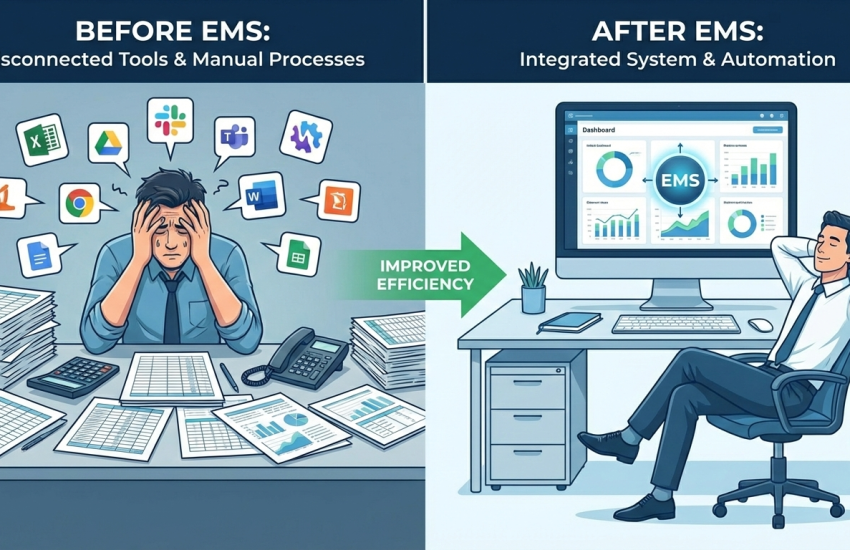
In today’s highly competitive and digital-driven economy, small and medium-sized enterprises (SMEs) are under constant pressure to improve efficiency, reduce costs, and adapt quickly to market changes. Managing operations with disconnected tools and manual processes is no longer sustainable. This is where an Enterprise Management System (EMS) becomes essential.
An enterprise management system for SMEs helps businesses centralize operations, automate workflows, and gain real-time visibility across the organization. This article explores what an enterprise management system is, how it works, and why SMEs increasingly rely on it to support long-term growth.
What Is an Enterprise Management System?
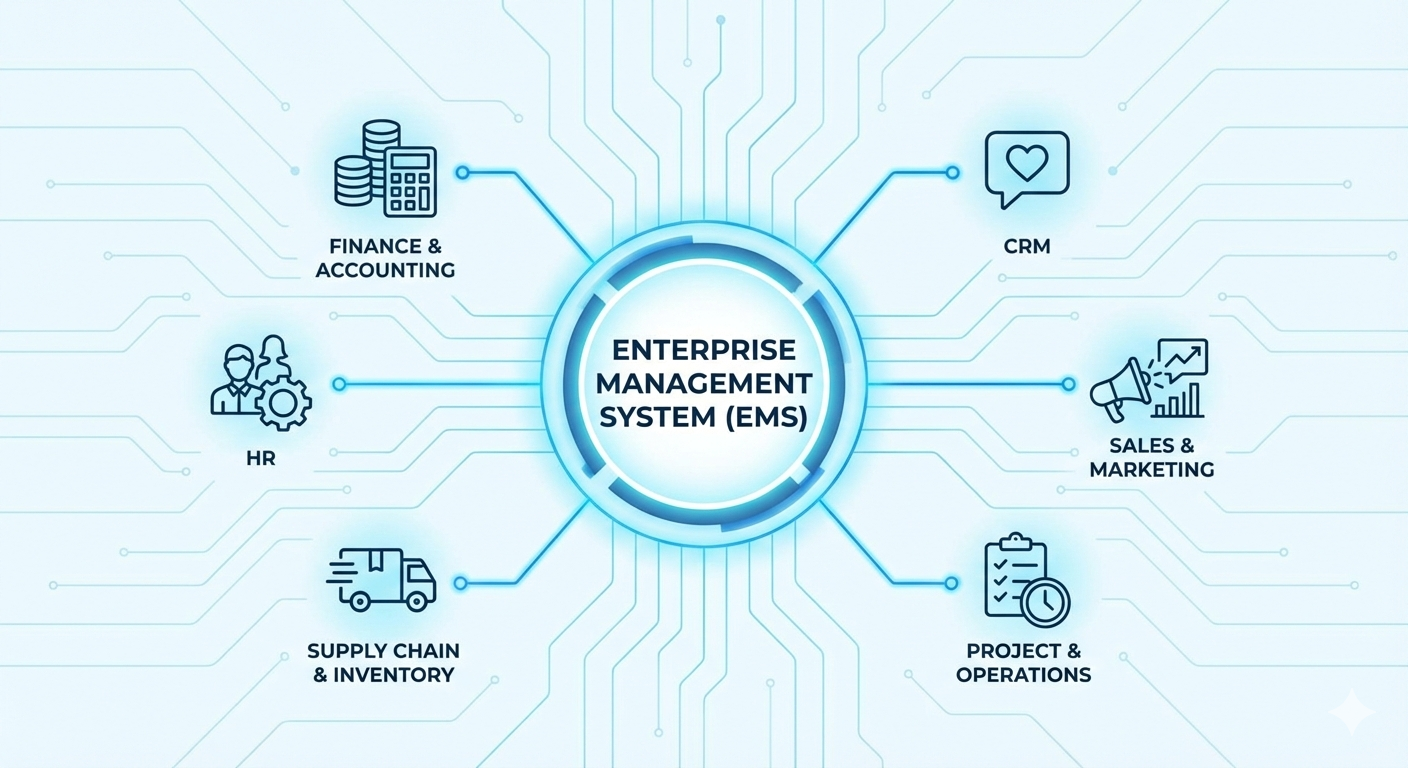
An Enterprise Management System (EMS) is an integrated software solution that helps businesses manage core operational processes through a single, unified platform. Instead of relying on multiple standalone tools, an EMS connects key business functions into one system.
Core Components of an Enterprise Management System
A typical enterprise management system includes modules that support:
- Financial management and accounting
- Human resource management (HRM)
- Inventory and supply chain management
- Customer relationship management (CRM)
- Sales, procurement, and operations
- Reporting and analytics
By integrating these functions, an enterprise management system for SMEs ensures that data flows seamlessly across departments, reducing errors and improving collaboration.
How an Enterprise Management System Works for SMEs
Modern enterprise systems are no longer designed exclusively for large corporations. Today, many platforms are built specifically to address the needs and constraints of SMEs.
Centralized Data and Single Source of Truth
One of the most important benefits of an enterprise management system for SMEs is centralized data management. All business information is stored in one system, ensuring consistency and accuracy across departments.
This eliminates data silos and enables teams to access real-time information when making operational or strategic decisions.
Workflow Automation
An enterprise management system automates repetitive and time-consuming tasks such as:
- Invoicing and billing
- Payroll processing
- Inventory updates
- Purchase orders
- Performance reporting
Automation helps SMEs reduce manual workload, minimize errors, and increase overall productivity.
Real-Time Monitoring and Reporting
With built-in dashboards and analytics tools, SMEs can monitor key performance indicators (KPIs) in real time. Business owners gain immediate insight into cash flow, sales performance, inventory levels, and operational efficiency.
Why SMEs Need an Enterprise Management System
SMEs often operate with limited staff and resources, making efficiency critical. Implementing an enterprise management system for SMEs directly addresses common operational challenges.
Improved Operational Efficiency
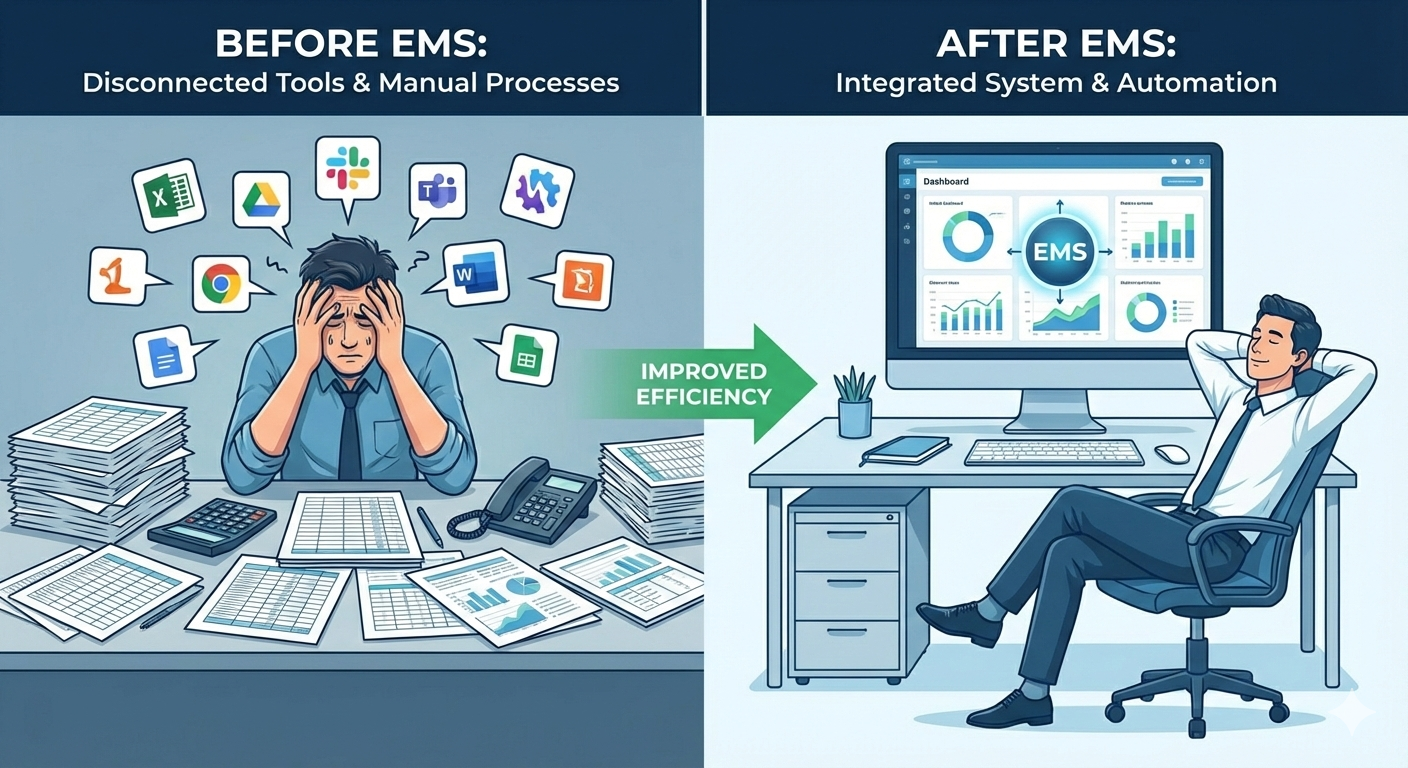
Using spreadsheets and disconnected software leads to duplicated work and inconsistent data. An EMS streamlines processes by connecting all departments within a single platform, allowing teams to work faster and more efficiently.
Better Decision-Making Through Data
Accurate and timely data is essential for smart decision-making. An enterprise management system provides SMEs with reliable insights that support planning, forecasting, and strategic growth.
Instead of reacting to problems after they occur, businesses can identify trends and take proactive action.
Key Benefits of an Enterprise Management System for SMEs
Cost Control and Financial Visibility
Financial management is one of the biggest challenges for SMEs. An EMS helps track expenses, manage budgets, and generate financial reports with greater accuracy.
Improved financial visibility enables SMEs to control costs, reduce waste, and improve profitability.
Scalability and Flexibility
As SMEs grow, their business processes become more complex. An enterprise management system for SMEs is designed to scale, allowing businesses to add users, modules, or functionalities without major system changes.
This flexibility supports sustainable growth and long-term planning.
Enhanced Customer Experience
By integrating CRM functionality, an enterprise management system enables SMEs to manage customer interactions more effectively. Teams can track leads, monitor customer history, and respond faster to inquiries.
Improved customer management leads to higher satisfaction, retention, and lifetime value.
Common Features of an Enterprise Management System for SMEs
While features vary by provider, most enterprise management systems for SMEs include the following capabilities:
Financial Management
- General ledger and accounting
- Invoicing and payment tracking
- Expense management
- Financial reporting and compliance
Human Resource Management
- Employee records and payroll
- Attendance and time tracking
- Performance management
- Workforce planning
Inventory and Supply Chain Management
- Stock level monitoring
- Order and procurement management
- Supplier coordination
- Demand forecasting
Cloud-Based vs On-Premise Enterprise Management Systems
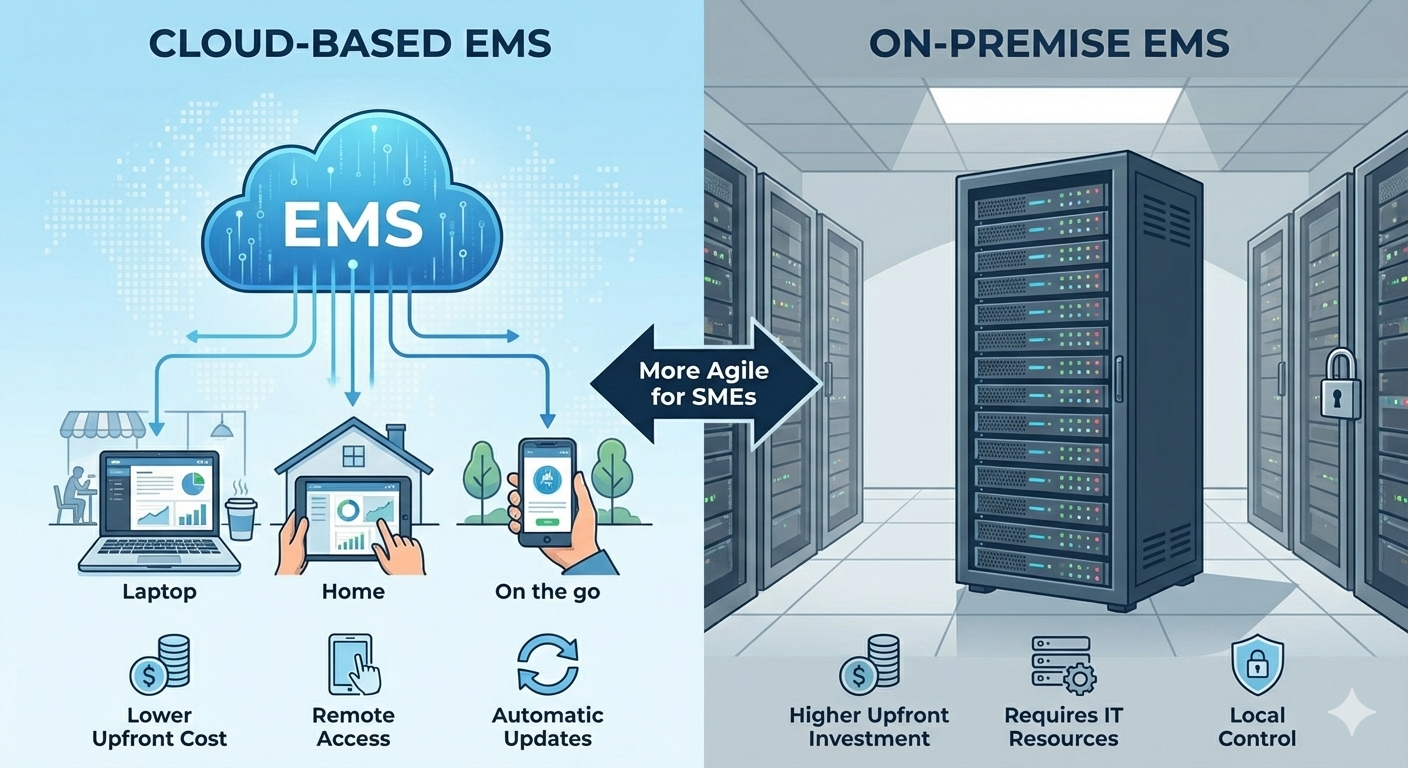
When choosing an enterprise management system, SMEs must decide between cloud-based and on-premise deployment.
Cloud-Based Enterprise Management Systems
Cloud-based systems are accessed via the internet and hosted by the software provider. They are popular among SMEs because they offer:
- Lower upfront investment
- Faster deployment
- Automatic updates and maintenance
- Remote access from any location
For most SMEs, cloud-based enterprise management systems provide the best balance of cost, flexibility, and scalability.
On-Premise Enterprise Management Systems
On-premise systems are installed on local servers and managed internally. While they offer greater control, they typically require higher initial costs and dedicated IT resources.
How to Choose the Right Enterprise Management System for SMEs
Selecting the right system is a strategic decision that impacts long-term success.
Assess Business Needs
SMEs should begin by identifying their most critical challenges, such as financial control, inventory management, or operational visibility.
Prioritize Usability and Integration
An enterprise management system should be easy to use and integrate with existing tools. Complex systems can slow adoption and reduce return on investment.
Choose an Experienced Technology Partner
Working with an experienced provider is essential. Companies such as AMADEUS TECHNOLOGY B.V. focus on delivering scalable and practical enterprise management system solutions that align with the real operational needs of SMEs.
Challenges SMEs May Face During Implementation
Despite its advantages, implementing an enterprise management system for SMEs can present challenges.
Change Management
Employees may resist new systems. Proper training and clear communication are key to ensuring smooth adoption.
Initial Investment and Time
Although enterprise systems deliver long-term value, implementation requires time and budget. SMEs should plan carefully to minimize disruption and maximize ROI.
Conclusion
In an increasingly competitive market, SMEs must operate smarter and more efficiently. An enterprise management system for SMEs provides the tools needed to centralize operations, automate workflows, and make data-driven decisions.
By choosing the right solution and implementation partner, such as AMADEUS TECHNOLOGY B.V., SMEs can build a strong digital foundation that supports growth, resilience, and long-term success. Investing in an enterprise management system is no longer optional—it is a strategic necessity for modern SMEs.
